The Classic Free Images collection
Historical fashion illustrations: reading the silhouette and the story
Clothes, characters and changing taste
Fashion images offer a particular pleasure: a small change in a sleeve, hat or hem can transform the whole figure. They also invite questions about how clothes were promoted and imagined. Looking at the garment, the pose and the page together reveals much more than trying to attach a decade to a picture at first glance.
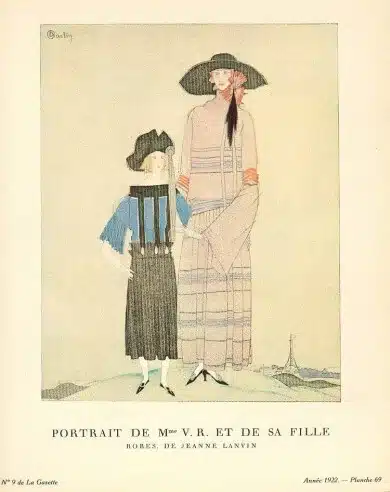
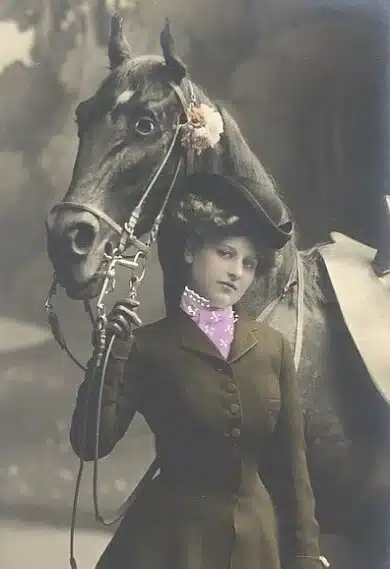
The Romantic Images and Victorian Women galleries contain different kinds of dress imagery, including illustrations and photographic portraits. A collection name is a browsing category rather than a reliable date for every item. Begin with the particular picture and use documented comparisons when you need to identify it.
Take in the silhouette before the decoration
Imagine the figure as a single dark shape. Where is it widest? Does the outline expand at the shoulders, waist, hips or lower skirt? How does a hat contribute to the total shape? These questions help you see the structure that small details can obscure.
Next, look at the relationship between the waist and the rest of the garment. A belt, a change in colour or a drawn fold may emphasise a particular point. Distinguish that visual emphasis from a measurement of the wearer’s body. An illustrated figure is a designed representation.
Compare two examples at the same displayed height. Otherwise a larger image can seem more dramatic simply because it takes up more screen space. Keep their complete outlines visible, including headwear and footwear, before deciding which differences matter.
Follow the garment from top to bottom
Work through a consistent sequence: headwear, neckline, shoulders, sleeves, bodice or jacket, waist, skirt or trousers, then footwear. Add accessories afterwards. A sequence stops a striking hat from becoming the only thing you remember.
Use everyday descriptive terms when a specialist name is uncertain. “A sleeve full at the upper arm and narrow near the wrist” tells another reader what you observed. A precise historical term can be added when a reliable reference supports it.
Notice where the artist concentrates detail. Closely drawn trim may attract attention to the neckline while a broad area of plain colour gives the lower garment a different weight. That is a decision about the illustration as well as a possible feature of the clothing.
Fashion plates were part of a publishing system
The V&A’s research into the Colin sisters describes the work of Héloïse Leloir, Anaïs Toudouze and Laure Noël in nineteenth-century fashion illustration. Their images appeared in periodicals and formed part of a network of artists, engravers, printers and fashion trades.
The museum explains how many fashion plates combined engraved or etched marks with colouring applied by hand. Its cataloguing work also demonstrates the importance of examining small credits: artists previously overlooked in groups of acquired material became identifiable through closer study.
For your own research, this suggests two useful habits. Preserve the margins where names and publication details may appear, and record different production roles separately. A name below a picture could identify an illustrator, engraver, printer or publisher. The relationship needs to be read, not assumed.
A fashion picture does not stand for everyone
A published illustration can present an aspiration, a selected style or a particular occasion. It does not show the entire range of clothing worn in a place or period. Ask who the image appears to address and what features it makes desirable.
A photographic portrait also involves selection. Clothing, pose, framing and the circumstances of the sitting all affect what is shown. The picture may record a real garment, but it does not automatically explain how often it was worn or what the sitter thought about it.
Keep these questions open when comparing people’s clothes. An elaborate outfit does not by itself establish a person’s occupation or social position. A name printed nearby does not identify a sitter until the connection is supported by the source record.
Compare illustrations with surviving garments
The V&A’s discussion of three historical dresses follows examples from the nineteenth century into the 1930s. Looking at actual garments alongside fashion imagery helps reveal the difference between a drawn effect and a constructed object.
Choose one detail for comparison, such as how a sleeve joins a shoulder or how a skirt falls from the waist. A museum’s photographs from several angles can answer questions that a single front-facing illustration leaves unresolved.
Pay attention to what the object record actually documents. Fabric, maker, dimensions and construction details may be supplied for a surviving dress. A similar-looking illustration does not automatically share those properties. Record the resemblance as a comparison rather than transferring the garment’s identity to the picture.
Use period references carefully
A broad style reference is a beginning for research. The V&A’s 1890s fashion introduction, for example, discusses conspicuously full sleeves and selected pieces from a documented wardrobe. It provides named examples against which a visual feature can be studied.
A matching sleeve shape does not date an unknown photograph on its own. Clothes can be retained, altered or worn for a particular performance; an illustration can refer to an earlier style. Combine several supported details and keep the proposed date tentative until the evidence becomes stronger.
If a catalogue gives a range, retain that range. Converting “about” or “possibly” into an exact year makes a record look tidier while losing information about its certainty. A good comparison notebook preserves those distinctions.
Make a study sheet that teaches you something
Choose a focused theme: three sleeve shapes, several uses of a broad-brimmed hat, or the placement of contrasting trim. Put the images on a sheet with enough space for short observations. Avoid collecting dozens of unrelated pictures before deciding what you want to investigate.
For each example, write a descriptive title, a source reference and one visual observation. Add a separate line for a documented identification. This makes it possible to revise the history later without losing the useful comparison you made by looking.
Keep the complete source image beside any detail crop. A small accessory makes more sense when you can return to its scale and position within the outfit. A crop should help you examine a detail, rather than quietly change the evidence available.
Bring fashion imagery into a design project
A tall silhouette can work well beside a narrow column of text; a repeated accessory can provide a small decorative motif. Choose an element for a reason connected with the new layout, then test it at the size the reader will actually see.
If you are making stationery, leave enough clear space for modern wording to remain readable. Preserve credits in the research copy even if the final design uses a permitted detail crop. The stationery guide covers practical layout and proofing decisions.
For costume research, treat the illustration as visual reference rather than a complete specification. Hidden seams, underlayers and the back of a garment may not be shown. Consult garment records and suitable construction references before translating an attractive outline into something wearable.
Check the rights for an individual image before distributing an adaptation. Then continue into the printmaking guide to investigate the marks used to reproduce a fashion image, or compare ornamental line in the Art Nouveau guide. Fashion imagery becomes more rewarding when the silhouette opens a series of specific questions about the picture and the world that produced it.